A Practical Guide to Inspection and Adjustment
As a professional manufacturer providing one-stop vibration isolation solutions, Anlijing Vibration Reduction Technology Co., Ltd. frequently receives inquiries from customers saying:
"The vibration isolators have been installed, but there is little or no vibration reduction."
In most cases, the isolator itself is not the problem. Below are the three most common causes and how to troubleshoot them.
1. The Equipment Is Still Rigidly Connected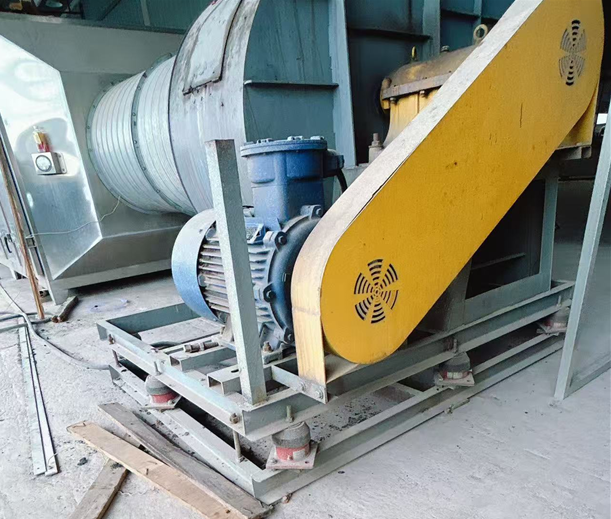
For example, an outdoor fan has been installed with air spring vibration isolators, yet the customer reports no noticeable vibration reduction.
Cause Analysis
The purpose of a vibration isolator is to interrupt the rigid transmission path between the machine and its supporting structure.
However, if the equipment mounting bolts are still tightly fastening the machine directly to the foundation, they create a rigid connection that bypasses the isolators, preventing them from functioning.
Another important point is to verify whether the installed product is a true air spring vibration isolator. A genuine air spring isolator is inflatable and provides excellent low-frequency vibration isolation.
Professional Recommendation
Air spring vibration isolators are not recommended for outdoor applications.
The elastic element is made of rubber, which is susceptible to:
UV exposure
High temperatures
Weathering and aging
Over time, rubber may crack, resulting in degraded vibration isolation performance and even safety risks.
For outdoor fan equipment, spring vibration isolators are a better solution. Properly designed spring isolators generally provide better vibration isolation than air spring isolators, are less affected by environmental conditions, and offer a much longer service life.
Recommended Anlijing models for large fan equipment include:
Model | Type | Spring Material | Static Deflection | Travel Limit | Height Adjustable | Natural Frequency |
ALJ-17 | 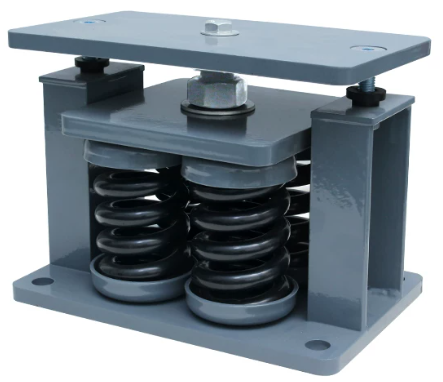
| 55CrSi or 60Si2Mn | 25mm | Yes | Yes | 3.5Hz |
ALJ-19A |
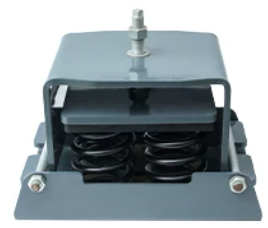
| 55CrSi or 60Si2Mn | 25mm | Yes | Yes | 3.2Hz |
ALJ-19B | 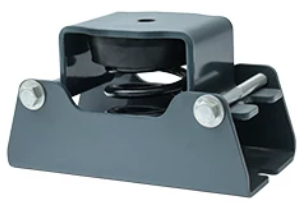
| 55CrSi or 60Si2Mn | 25mm | Yes | No | 3.2Hz |
ALJ-04 | 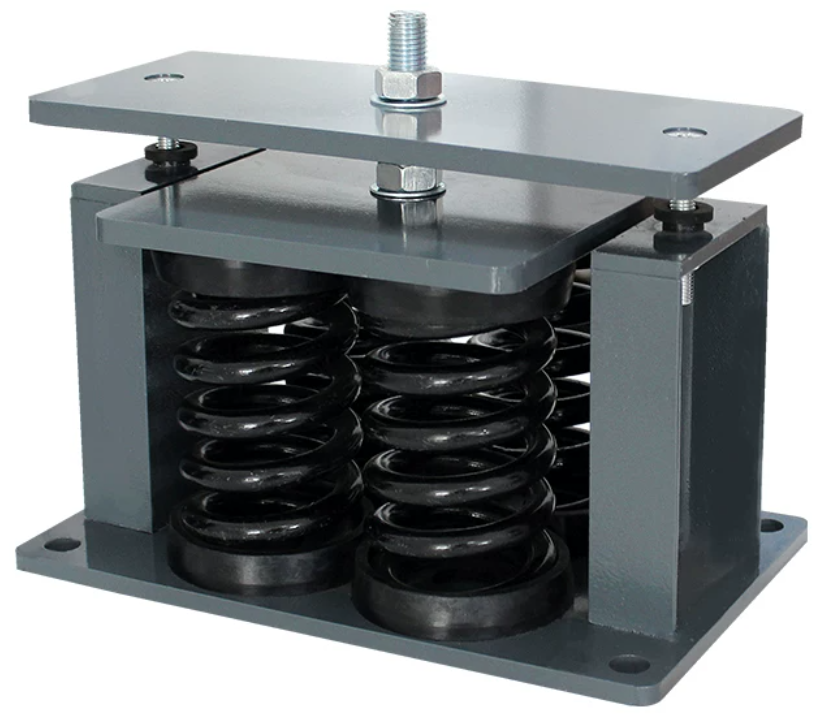
| 55CrSi or 60Si2Mn | 50mm | Yes | Yes | 2.2Hz |
2. Improper Installation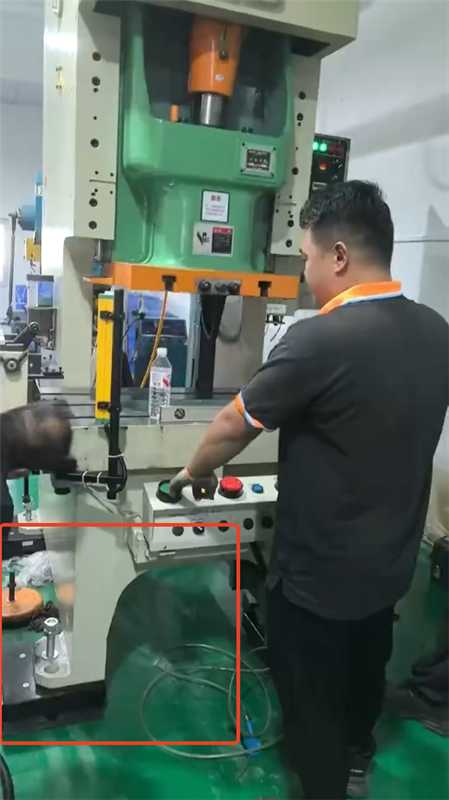
(1) Insufficient Clearance Inside the Spring Isolator
After installation, there should always be adequate clearance between the upper and lower steel housings of the spring isolator.
During operation, the equipment compresses the spring under dynamic load. If the upper and lower housings come into contact, the isolator will bottom out, significantly reducing or completely eliminating its vibration isolation performance.
Solution
Adjust the height adjustment nut until sufficient clearance is achieved, allowing the spring isolator to operate within its designed working range.
(2) Equipment Not Centered on the Isolator
In one case, a punch press was installed off-center on the vibration isolator, resulting in poor isolation performance.
When the isolator is correctly selected, the center of the isolator must coincide with the center of the equipment mounting foot.
Only when the load is evenly distributed can the isolator deliver its designed vibration isolation performance.
3. Distinguish Between Vibration and Noise Problems
 When customers report that the vibration reduction is "unsatisfactory," it is important to determine whether:
· the vibration isolation performance is insufficient, or
· the remaining problem is airborne noise rather than vibration.
A Simple Verification Method
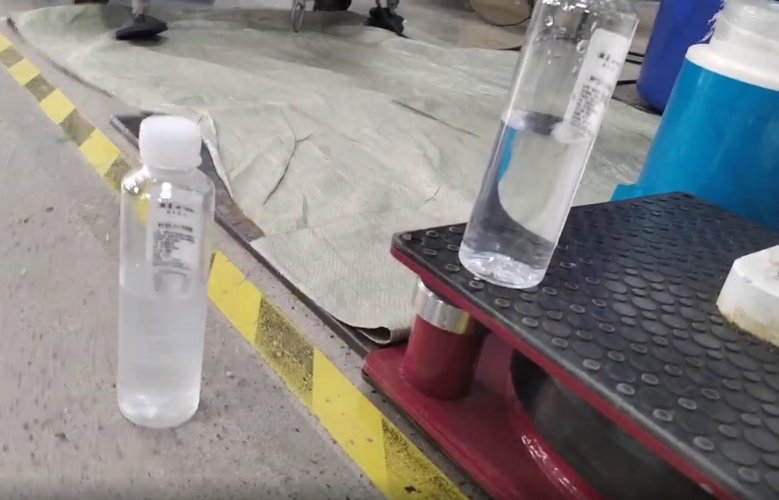
Place a half-filled bottle of water:
· on the equipment base directly above the vibration isolator, and
· on the adjacent fixed floor or foundation.
Compare the water surface movement.
If the water above the isolator shows obvious ripples while the water on the surrounding floor remains almost still, the vibration isolator is effectively blocking vibration transmission.
This confirms that the vibration isolation system is functioning properly.
Identifying Airborne Noise vs. Structure-Borne Noise
Two simple tests can help identify the source of the remaining noise.
Airborne Noise
If the perceived noise changes significantly when opening or closing windows, the primary source is airborne noise.
Additional acoustic treatment, such as sound insulation or sound absorption, is required.
Structure-Borne Noise
If opening or closing windows has little effect, but the noise becomes much louder when placing an ear against the wall, the remaining problem is likely structure-borne noise.
In this case, inspect the entire system for additional vibration transmission paths, including:
· Other equipment without vibration isolators
· Pipes rigidly passing through walls
· Structural rigid connections
A comprehensive vibration isolation solution is often required.
Learn More
Official Website
www.anlijing.cn
www.anlijing.com
About Anlijing Vibration Reduction Technology Co., Ltd.
Anlijing specializes in vibration and noise control for industrial and electromechanical equipment.
Driven by engineering data and precise load calculations, we provide comprehensive services including vibration testing, engineering design, product selection, and customized vibration isolation solutions.